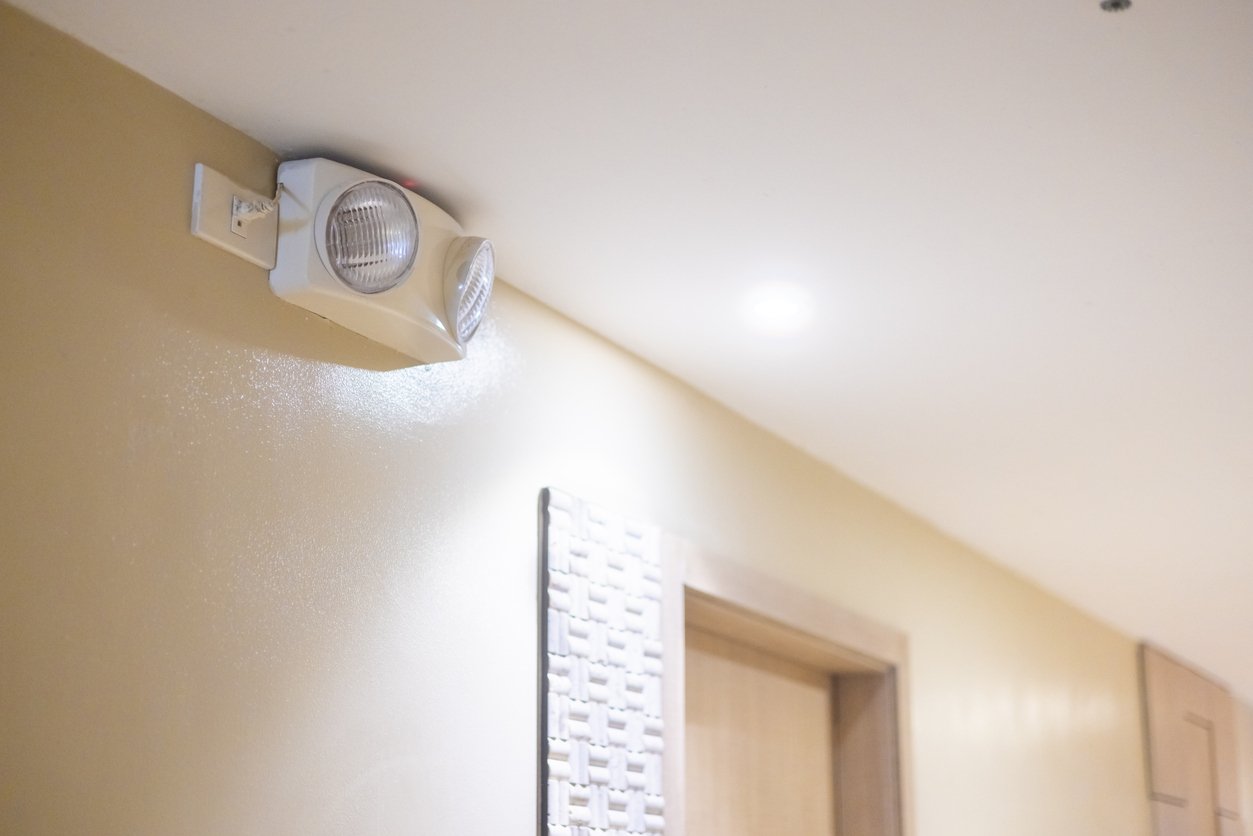
Emergency lighting in Florida commercial buildings falls under the Florida Fire Prevention Code, which adopts NFPA 101, also known as the Life Safety Code. UL924 emergency lighting relays are the devices that force emergency lighting fixtures on when normal power is lost. Functional Devices, Inc. manufactures UL924-listed automatic load control relays (ALCRs) and bypass/shunt relays for these applications.

Florida Emergency Lighting Codes
The Florida Fire Prevention Code applies statewide. It is adopted by the State Fire Marshal on a three-year cycle, and it is enforced by the local fire official in each jurisdiction. The current edition adopts the 2021 Florida editions of NFPA 1 and NFPA 101. On the electrical side, Chapter 27 of the Florida Building Code, 8th Edition (2023) adopts the 2020 National Electrical Code by reference. NEC 700.26 permits listed ALCRs on emergency lighting circuits, but the language is permissive, and the lighting control design determines whether one applies.
Emergency Lighting Testing in Florida
NFPA 101 sets two tests: a monthly test of at least 30 seconds, conducted at 30-day intervals, and an annual test of at least 90 minutes for battery-powered emergency lighting. Records must be kept for inspection, and documentation is checked by a local fire official.
The annual 90-minute discharge is the meaningful endurance test that corresponds to Florida's outage conditions: it confirms a battery can sustain egress illumination for the full rated duration, whereas the 30-second monthly check only confirms the unit activates. A degraded battery may pass the 30-second check on residual capacity but fail a sustained discharge, so the annual test is where that failure becomes clear.
Where a UL924 ALCR Applies
An ALCR is the correct device when an emergency fixture must switch and dim with the surrounding normal lighting: if the fixture follows a wall switch, occupancy sensor, or 0–10 Vdc dimming signal, a relay will override those controls on loss of normal power and drive the fixture to full output. A bypass/shunt relay is the correct device if a fixture has no shared dimming control, and, upon loss of normal power, simply needs to be forced on by bypassing its wall switch or panel circuit.
The related UL1008 listing covers a different function: transferring a branch circuit from a normal source to an emergency source. UL924 is a control override; UL1008 is a source transfer. The distinction between UL924 and UL1008 emergency lighting control is covered in a separate Functional Devices article.

UL924 RIB® Models
Functional Devices manufactures these products under the RIB® (Relay-In-a-Box®) line:
- For emergency fixtures controlled with surrounding normal lighting, the ESRN is a 20 Amp SPST ALCR with a universal 120–277 Vac input, 0–10 Vdc dimmer override, and a dry contact fire alarm interface. A local test button and a remote test input support the monthly and annual functional tests; the remote test button (ESRTB) is sold separately.
- For low-power LED systems, the ESRN-U is a 20 Amp SPDT variant with low normal-mode power draw, zero emergency power draw, and both 0–10 Vdc and DALI (Digital Addressable Lighting Interface) override.
- For shunting around a wall switch or panel circuit, the ESR2401B (120 Vac) and ESR2402B (277 Vac) are 20 Amp bypass/shunt relays.
- For linear fixtures and ballast-channel mounting, the ESRLBC comes in a slim enclosure and includes an isolated relay for 0–10 Vdc and DALI dimming.
Frequently Asked Questions About UL924 Emergency Lighting in Florida
How often must emergency lighting be tested in Florida?
Monthly for at least 30 seconds and annually for at least 90 minutes for battery-powered systems, per NFPA 101 as adopted by the Florida Fire Prevention Code. Test records must be kept for inspection by the local fire official.
Does the NEC require an ALCR?
No. NEC 700.26 permits automatic load control relays on emergency lighting circuits. Whether an ALCR is the right choice for lighting control depends on the design: fixtures that must follow normal lighting controls call for an ALCR, and fixtures that only need to be forced on can use a bypass/shunt relay.
What is the difference between UL924 and UL1008?
UL924 covers devices that override lighting controls to force emergency fixtures on when normal power is lost. UL1008 covers devices that transfer a branch circuit from a normal power source to an emergency source.
What is an ALCR?
An automatic load control relay (ALCR) overrides a fixture’s normal lighting controls—a wall switch, occupancy sensor, or 0–10 Vdc dimming signal—on loss of normal power, driving the fixture to full output. It is the correct device when an emergency fixture needs to switch and dim with the surrounding normal lighting under normal conditions.
Why might a battery pass a monthly test but fail an annual test?
In Florida, the monthly test requirement runs for only 30 seconds, which a battery can supply on residual capacity even after it has degraded. The annual 90-minute test discharges the battery over its full rated duration, so reduced capacity is more likely to become apparent.

Source UL924 Relays for Florida Emergency Lighting
The right device depends on whether the fixture already follows a dimming or switching signal—but an authorized Functional Devices distributor can help confirm the model no matter what. Find an authorized Functional Devices distributor in Florida to confirm what’s in stock ahead of the next scheduled test cycle.