
In mission-critical facilities, power is not a convenience. It’s a promise. Data centers, hospitals, water treatment plants, transportation hubs, and industrial control environments all depend on uninterrupted electrical control to keep people safe, to keep systems stable, and to keep operations moving forward. A momentary failure can ripple outward, affecting uptime, safety, compliance, and trust.
Relays may not be the most visible components in these systems, but they are among the most important. When designed, installed, and specified correctly, they provide a reliable bridge between control logic and real-world equipment. When they fail, the consequences are immediate and often costly.
Functional Devices has built its reputation around this reality. As facilities push toward smarter automation, tighter integration, and higher performance expectations, Functional Devices relays continue to serve as dependable workhorses inside the systems that simply cannot afford to pause.
This approach is a practical expression of our 2026 theme: Pushing Boundaries. Powering Progress.
Relays Matter More in Mission-Critical Situations
Mission-critical facilities operate under a different set of assumptions. Redundancy is expected. Downtime is unacceptable. Maintenance windows are limited. And every component, no matter how small, must justify its place in the system.
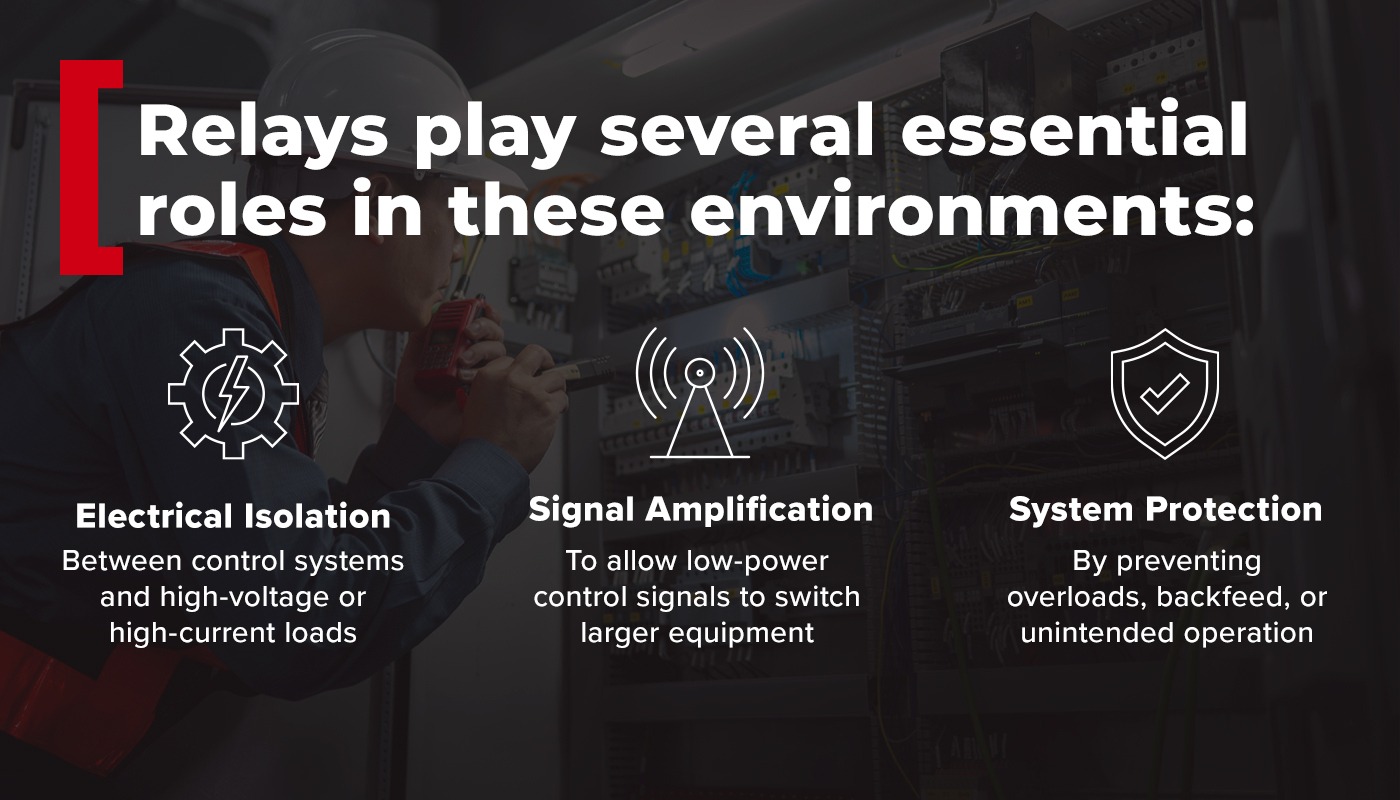
In environments where equipment runs continuously or responds to life-safety conditions, reliability is not theoretical. Components are selected based on track record, consistency, and ease of troubleshooting. This is where purpose-built control relays make a difference.
Functional Devices relays are designed with real installations in mind. Clear labeling, robust housings, and predictable performance reduce installation errors and speed up commissioning. Over time, those small advantages translate into fewer service calls and greater system confidence.
RIB Relays Are Built for Demanding Applications
Mission-critical facilities are rarely simple. A single building may include emergency power systems, BAS controls, fire and life-safety equipment, access control, and environmental monitoring, all operating in parallel.
Functional Devices relays are commonly used in applications such as:
- Data center cooling and power sequencing
- Hospital HVAC and isolation monitoring
- Industrial automation and process control
These environments demand components that can handle continuous operation and fluctuating loads without degrading performance. Functional Devices’s broad relay portfolio allows designers and installers to select the right form factor, voltage, and configuration for each use case. Explore the full Functional Devices relay lineup here.
Supporting Smarter, More Resilient Systems
Modern mission-critical facilities are becoming more intelligent. Sensors, analytics, and networked controls now provide real-time visibility into system performance. But all of that intelligence still relies on physical switching at the edge.
Relays are the point where digital decisions meet mechanical action. If that interface fails, even the most advanced system loses effectiveness.
Functional Devices has explored this evolution in recent industry discussions, including how relays and sensors support resilient infrastructure in data centers and other high-demand environments. Those insights reinforce a simple truth: smarter systems still need dependable hardware at their core.
Related reading:
- Smart Power for Data Centers: Relays & Current Sensors for Critical Infrastructure
- Power Failure Protection: Building Automation Controls Guide

What to Know for 2026: Reliability, Resilience, and Real-World Questions
As facilities continue to evolve, several themes are shaping how engineers and contractors think about control components. Below are key considerations and common questions heading into 2026.
What should facilities prioritize when selecting relays?
Reliability, clarity, and compatibility matter more than feature overload. Components should perform consistently and integrate easily with existing systems.
Are relays still relevant in highly digital environments?
Yes. Even the most advanced BAS or SCADA systems rely on physical switching to control equipment. Relays remain essential.
How do relays support resilience planning?
By providing predictable control and isolation, relays help prevent cascading failures and simplify troubleshooting during emergencies.
What role does standardization play?
Standardized relay solutions reduce training time, simplify spare parts management, and improve long-term maintainability.
How does Functional Devices support future-ready systems?
By focusing on practical design, installation efficiency, and proven performance, Functional Devices relays help facilities push boundaries without compromising reliability.
Powering Progress Where It Matters Most
Mission-critical facilities are not the place for guesswork. Every component must earn its place through performance, durability, and ease of use. Functional Devices relays continue to be trusted in environments where power must remain steady and control must remain absolute.
As automation grows more complex and expectations continue to rise, the fundamentals still matter. Reliable relays are part of the quiet infrastructure that keeps essential systems running without pause.
If you are planning, upgrading, or maintaining a mission-critical facility and want guidance on selecting the right relay solutions, talk with the experts at Functional Devices. Reach us at (800) 888-5538 or sales@functionaldevices.com.