Timing matters in automation. A time delay relay doesn’t just switch a device on or off—it controls when and for how long a particular action happens. From keeping lights on after motion is no longer detected, to preventing rapid cycling of fans and motors, time delay relays give designers and technicians predictable, coordinated control over electrical systems beyond what a basic relay can provide.
Choosing the right relay starts with understanding how different timing functions affect your application. Some relays delay activation until a set interval has passed, while others hold a device on for a fixed period after the triggering signal ends. Whether you’re planning an HVAC sequence, lighting control, or any timed operation in a building automation system, selecting the correct time delay relay ensures smooth performance, equipment protection, and efficient energy use.
We often get technical support calls asking about time delay relays, but many people are unsure of the type they need: Delay-on-Make (DOM) or Delay-on-Break (DOB).
Let's look at a simple scenario to better understand the difference between DOM and DOB.

Suppose you have some security floodlights that you want to turn on for 20 minutes when an unsavory character triggers a nearby motion sensor. What would happen if a DOM relay were being used?
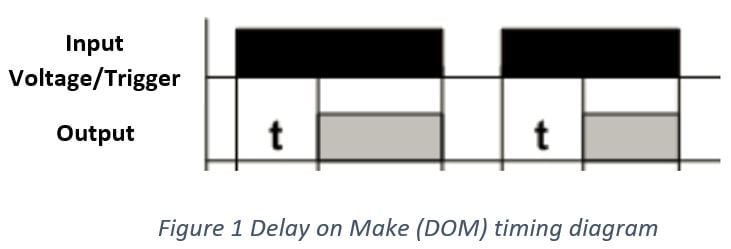
With a DOM relay, the motion sensor would have to be triggered for 20 minutes before the lights turned on and would turn off immediately once the trigger is gone. Under this setup, the lights don't turn on and the unsavory character gets away. However, if a DOB relay were being used, the results would be quite different.
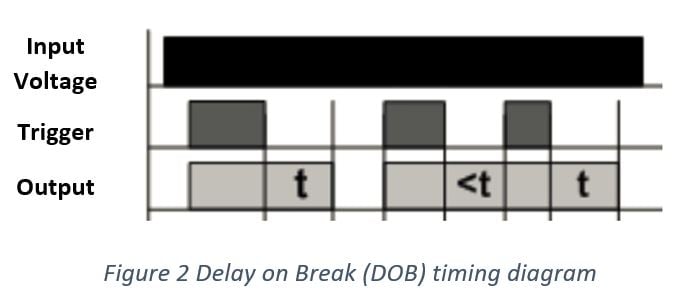
With a DOB relay, the motion sensor only needs to be triggered for a brief time before the lights turn on. Once the trigger is gone, the lights will remain on for the 20 minutes, and the unsavory character gets caught.
If you have an application that involves timing take a look at the following products:

What You Should Know
- Not all delays work the same way. Time delay relays can delay turn-on, delay turn-off, pulse on, or perform interval timing, so understanding the function is as important as the timing range.
- Application drives the choice. HVAC sequencing, lighting control, and motor protection each require different timing behaviors and reset conditions.
- Timing range matters. Selecting a relay with an appropriate adjustable range helps avoid fine-tuning issues and future reconfiguration headaches.
- Power and control requirements vary. Input voltage, control method, and load type must align with the system to ensure proper operation.
- Consistency improves reliability. Using standardized, field-proven relay designs simplifies installation, troubleshooting, and long-term maintenance.
Time Delay Relays in Building Automation Systems
Selecting the correct time delay relay starts with understanding how timing functions shape system behavior. Whether the goal is to prevent short cycling, sequence equipment startup, or extend operation after a trigger ends, the correct relay helps ensure systems run smoothly and predictably. Matching the delay type, timing range, and control requirements to the application reduces troubleshooting and improves long-term reliability for lighting controls.
As building automation systems become more integrated and performance expectations rise, precise timing control matters more than ever. Functional Devices offers a wide range of RIB® time delay relays designed for real-world automation challenges, making it easier to specify, install, and maintain dependable control solutions. Exploring the available options early in the design process can help avoid compromises later in the field.
As always, if you have any questions or need help selecting the right relay, be sure to contact us.
About Functional Devices, Inc.
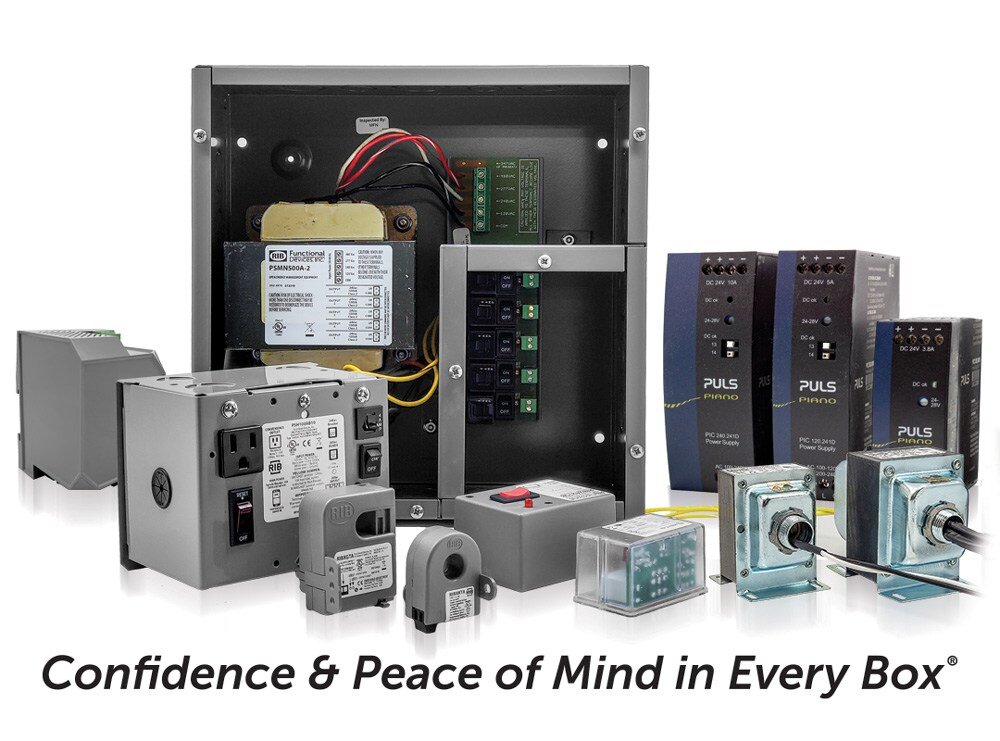
Functional Devices, Inc., located in the United States of America, has been designing and manufacturing quality electronic devices since 1969. Our mission is to enhance lives in buildings and beyond. We do so by designing and manufacturing reliable, high-quality products for the building automation industry. Our suite of product offerings include RIB relays, current sensors, power controls, power supplies, transformers, lighting controls, and more.
We test 100% of our products, which leads to less than 1 out of every 16,000 products experiencing a failure in the field.
Simply put, we provide users of our various products confidence and peace of mind in every box.