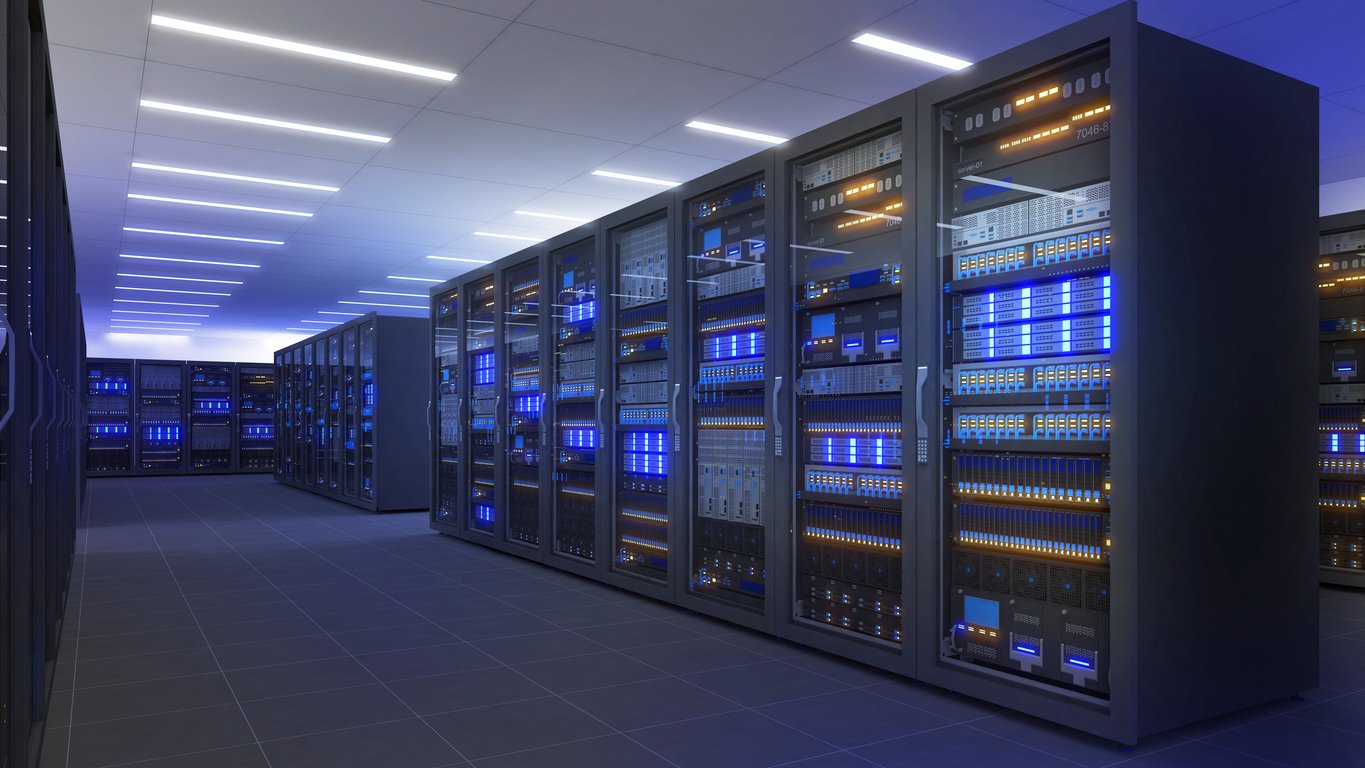
Modern data centers operate at a scale that would have been unimaginable a decade ago. They now rival heavy industrial facilities in total energy consumption and operate under performance expectations that allow for virtually zero downtime.
Data Center Power Usage: the Scale of the Challenge
To underscore the magnitude of today’s data-center environment, consider a few realities that define this sector:
- Massive Power Consumption: Global data centers consume an estimated 400–500 Terawatt-hours (TWh) of electricity annually, comparable to the usage of entire developed nations.
- Extreme Heat Loads: High-density racks routinely run at 10–50 kilowatts (kW) per rack, producing enough heat that thermal runaway can occur within minutes if cooling fails.
- High-Stakes Uptime: Even a few seconds of downtime can trigger contract penalties and business losses—industry research shows 60% of outages cost more than $100,000, and 15% exceed $1 million.
- Non-Stop Expectations: Most operators target 99.999% uptime, allowing for only minutes of permissible downtime per year.
- Relentless Growth: AI, cloud platforms, automation, and global digitalization are driving exponential growth in infrastructure, density, and energy usage.
Why BAS Is Critical
In this high-pressure environment, Building Automation Systems (BAS) are no longer optional. They are core infrastructure—responsible for maintaining uptime, controlling energy usage, diagnosing faults, and ensuring precise environmental conditions across the entire facility. Reliability, redundancy, and seamless integration with HVAC and electrical systems are essential for any modern data-center operation.
This article explains why BAS has become indispensable and how supporting components—such as Functional Devices' power monitoring, relays, sensors, and RIB® products—enable data-center operators to achieve the performance their facilities demand.

What a Building Automation System Does in a Data Center
A Building Automation System (BAS) acts as the operational brain of a data center. It monitors and controls essential subsystems, such as:
- HVAC and cooling plants
- Air distribution and humidity control
- Electrical distribution and redundancy
- Emergency ventilation and shutdown systems
- Leak detection and energy metering
- Room-level environmental conditions
- UPS and generator support systems
Given the density and thermal intensity of modern server rooms, BAS-driven monitoring and automated responses are essential to prevent failures and to maintain uptime.
Why BAS Has Become Indispensable in the 2025 Data Center
Explosive Power Usage and Cooling Demands
Growing server workloads and AI-driven compute clusters increase heat output dramatically. BAS helps operators maintain environmental stability by monitoring airflow, temperatures, redundancy status, and cooling performance—helping prevent overheating events.
Redundancy and Fault Tolerance
With Tier-level expectations like N+1 and 2N redundancy, fast switchover capabilities are essential. BAS ensures backups—CRAC units, fans, pumps, dampers, and breakers—engage instantly when failures occur.
Downtime Prevention and Predictive Operations
BAS improves visibility across both legacy and new systems. Predictive maintenance, automated alarms, and real-time analytics help operators catch issues before they become failures.
Energy Efficiency and Carbon Reduction
Modern data centers strive for PUE values below 1.5. BAS helps optimize cooling cycles, economizers, staging routines, and load balancing to minimize energy waste and reduce operating costs.
Scalability and Rapid Deployment
As data centers expand through modular pods and phased builds, BAS ensures new systems integrate quickly and consistently. High-speed commissioning and cross-platform compatibility are essential.
The Importance of Relays, Sensors, and Monitoring Equipment
A BAS is only as reliable as its field-level devices. Relays, sensors, and input/output modules perform the critical functions that allow the automation system to:
- Switch loads
- Trigger alarms
- Provide equipment status
- Send condition data to controllers
- Interface between electrical and control systems
Functional Devices supports these needs with RIB® relays, sensors, power supplies, and BAS-ready components chosen for their reliability, simplicity, and cross-platform compatibility.
How BAS Improves Uptime and Reduces Risk
Environmental Stability
Tight control of temperature, humidity, and airflow prevents IT equipment failures and extends hardware life.
Rapid Response to Alarms
Automatic relay-triggered actions shut down compromised systems, engage backups, redirect airflow, activate emergency ventilation, and notify operators.
Cyber-Physical Integration
BAS provides structure for secure communication, controlled access, and audit-ready system activity logs—protecting operational technology from digital threats.
Commissioning and Maintenance Support
Trend logs, alarms, and diagnostics reduce troubleshooting time and support long-term maintenance planning.

5 Ways Functional Devices Helps Data Center BAS
High-Reliability Relay Solutions (RIB® Products)
Data centers depend on relays for everything from equipment status monitoring to coordinated switching of HVAC components, pumps, alarms, and airflow systems.
- Functional Devices supports these needs with RIB® relays that are known for durability, consistent performance, and straightforward installation. Because they are compatible with virtually every major BAS platform, they integrate easily into both new construction and retrofit environments. Many operators choose RIB® products specifically because they reduce installation time and provide long-term reliability in mission-critical applications.
Environmental and Equipment Status Monitoring
Modern data centers rely on precise environmental feedback—temperature, humidity, airflow, and equipment conditions must be monitored continuously to protect high-value IT hardware.
- Functional Devices offers sensors and input/output devices that help feed accurate data into BAS platforms. These components support the monitoring of fans, dampers, pumps, flow switches, and safety interlocks, giving operators the visibility needed to maintain system stability and respond quickly to emerging issues.
Power Supplies for BAS and Control Devices
Stable and dependable low-voltage power is essential for the field devices that support automation systems.
- Functional Devices manufactures power supplies designed to deliver reliable performance in demanding environments. By ensuring that sensors, relays, and control hardware remain powered—even during electrical transitions or abnormal events—these supplies help maintain the integrity of the BAS monitoring layer and reduce the chance of blind spots during critical moments.
Fast Integration and Commissioning
In data centers, speed of deployment matters. Facility teams often operate under tight timelines as they add new pods, expand cooling capacity, or integrate upgraded electrical systems.
- Functional Devices contributes to these efforts by designing products that install quickly and with minimal complexity. Pre-wired components, standardized mounting options, and simplified wiring reduce the time technicians spend in the field and help ensure that BAS upgrades or expansions proceed smoothly. This ease of installation is especially valuable during live facility upgrades where downtime is not an option.
Trusted Performance in Mission-Critical Environments
Reliability is the foundation of every data-center decision.
- Functional Devices builds its components to operate continuously in high-stakes environments, from data centers to hospitals and laboratories. Engineers and operators appreciate the long service life, consistent performance, and predictability of these products. While the purpose of this blog is primarily educational, it is worth noting that our hardware has earned its reputation through decades of dependable operation in facilities where uptime and resilience are non-negotiable.
6 Future Trends in Data-Center BAS
AI-Driven Cooling Optimization
Artificial intelligence is beginning to reshape thermal management by predicting hotspots, adjusting airflow automatically, and optimizing cooling capacity based on real-time server activity. These systems can significantly reduce energy consumption while maintaining strict environmental tolerances.
Immersion and Liquid-Cooling Integration
As rack densities increase, more data centers are turning to liquid and immersion cooling systems to manage heat loads that traditional air-based systems can’t handle. BAS platforms are evolving to monitor pumps, fluid temperatures, flow rates, and leak detection to ensure safe and efficient operation.
Edge-Site BAS Systems
With compute workloads increasingly distributed across smaller regional or local edge facilities, BAS solutions must become lighter, faster to deploy, and easier to manage remotely. Operators will rely on cloud-connected BAS for the central oversight of hundreds or thousands of micro-sites.
Dense Thermal Sensor Networks
High-resolution environmental mapping allows operators to pinpoint airflow imbalances and thermal anomalies more accurately than ever before. Advanced sensor networks provide granular data that BAS platforms use to fine-tune cooling strategies and improve overall facility efficiency.
Real-Time Digital Twins for Operations
Digital twin technology allows operators to simulate conditions, test “what-if” scenarios, and visualize how equipment changes will affect performance before making physical adjustments. These models can help predict failure risks and optimize cooling strategies across dynamic workloads.
AI-Assisted Fault Detection and Predictive Maintenance
Machine learning algorithms can recognize patterns in equipment performance, identifying early signs of failure that human operators might miss. As these systems mature, BAS platforms will move from reactive responses to proactive, condition-based maintenance strategies.
Conclusion: BAS Is Core Infrastructure
Today’s data centers demand:
- Extreme reliability
- Redundant systems
- Continuous monitoring
- Environmental precision
- Fast commissioning
- Seamless integration
- Near-perfect uptime
A robust BAS is essential to meeting these expectations. Functional Devices supports the data-center industry with dependable relays, sensors, power supplies, and automation components designed for mission-critical performance.

Find a Local Distributor | Search Functional Devices BAS Products
Resources for More Information About Data Center BAS
- Uptime Institute – Annual Outage Analysis & Data Center Research: Widely regarded as the industry benchmark for reliability, outage statistics, and operational best practices. Their annual reports detail risks, energy use, redundancy expectations, and emerging infrastructure trends. www.uptimeinstitute.com
- ASHRAE – Technical Committee 9.9 (Mission-Critical Facilities, Technology Spaces, and Electronic Equipment): Publishes the industry’s most influential guidelines for data-center thermal management, environmental conditions, and building system integration—including BAS interactions with HVAC. www.ashrae.org (search “TC 9.9”)
- U.S. Department of Energy – Data Center Energy Efficiency Resources: DOE produces extensive guidance on energy-efficient cooling, monitoring strategies, advanced controls, and best practices for reducing Power Usage Effectiveness (PUE). www.energy.gov (search “Data Center Energy Practitioner Program”)
- AFCOM – Data Center World Research Reports: AFCOM’s annual State of the Data Center Report covers capacity growth, cooling strategies, redundancy, facility risk, and automation trends across the data-center industry. www.datacenterworld.com
- Green Grid – PUE, DCiE, and Efficiency Frameworks: Creators of the Power Usage Effectiveness (PUE) metric. Their white papers examine efficiency, sustainability, monitoring, and the role of controls in facility optimization. www.thegreengrid.org
- International Data Center Authority (IDCA): Publishes frameworks, certifications, and global standards related to data-center operations, reliability, and environmental control systems—including automation. www.idc-a.org