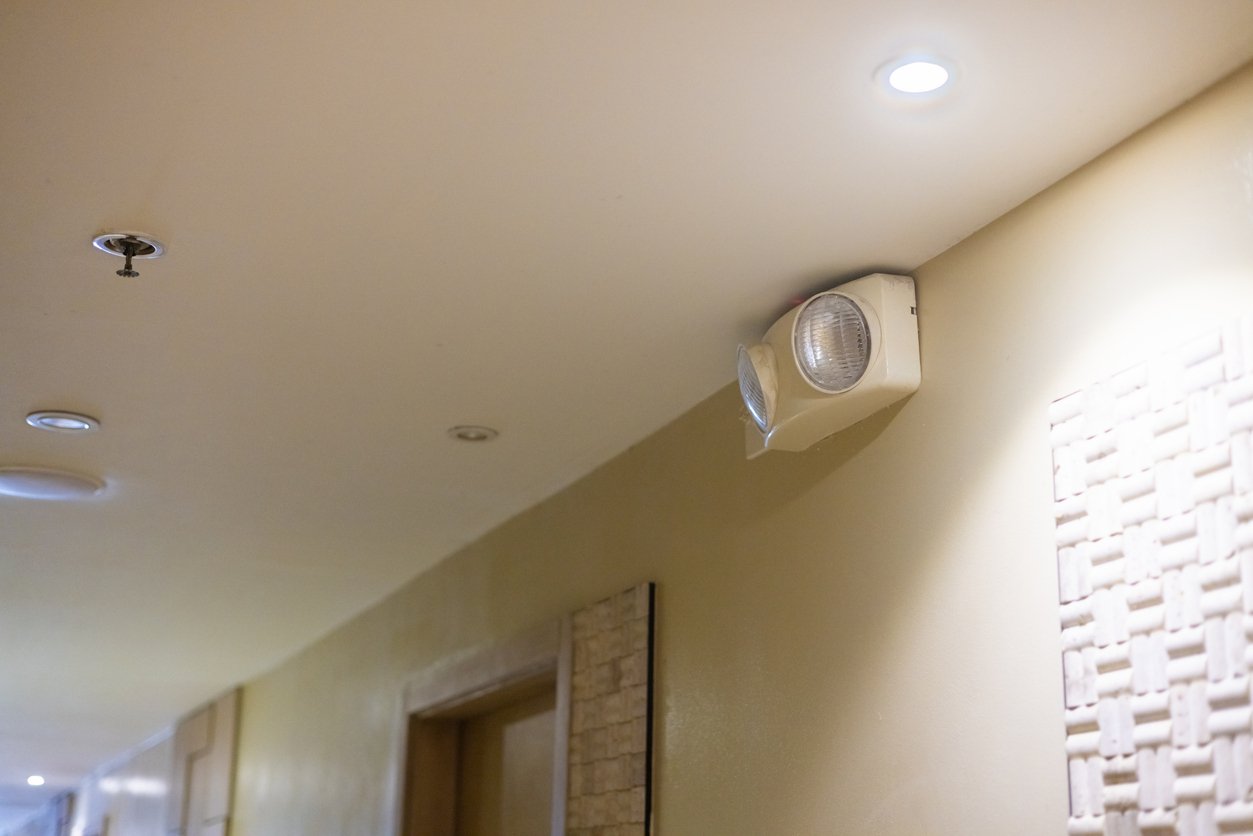
A UL924 emergency lighting relay overrides the normal lighting controls and drives designated fixtures to full output the moment normal power fails. Specifying the correct relay for a circuit depends on how that circuit is controlled, dimmed, and powered. Functional Devices, Inc. manufactures automatic load control relays (ALCRs), bypass/shunt relays, and a UL1008-listed branch circuit transfer switch. Read more about the applications of each below.

What a UL924 ALCR Does
The ALCR is the workhorse of emergency lighting control. During normal operation, it allows emergency fixtures to be operated along with the rest of the lighting, so they switch and dim like any other fixture in the space. When normal power fails, it overrides whatever switch, dimmer, or sensor was controlling those fixtures and forces them to full output. Some ALCRs can also take a dry-contact input from a fire alarm system, so the fixtures go to full output on an alarm as well.
Matching a UL924 Relay to the Circuit
Five capabilities decide which model best fits your application.
1- Voltage
The ESRN and ESRN-U have a universal 120–277 Vac input. Bypass/shunt relays are chosen by the utility voltage they sense: the ESR2401B for 24 Vac/dc or 120 Vac, the ESR2402B for 24 Vac/dc or 208–277 Vac. Both switch loads rated to 277 Vac.
2- Dimming
On a dimmed circuit, the relay overrides the dimmer when power fails and drives the fixture to full brightness. The ESRN and the bypass/shunt relays ESR2401B and ESR2402B all override 0–10 Vdc dimming; the ESRN-U adds DALI, which covers most modern LED drivers.
3- Fire Alarm
For fixtures that have to respond to a fire alarm, the relay needs a dry-contact fire-alarm input. The ESRN and ESRN-U both have one.
4- Test and Load
The ESRN-U has an optional daily self-test, and it is built for the low current but high inrush that LED emergency fixtures draw.
5- Mounting
Most models are standard enclosed relays. The ESRB mounts in a fixture’s ballast channel, and the ESRLBC is a slim enclosure made for linear LED fixtures.
Between them, the ESRN-U is the ALCR with the widest range of applications: universal voltage, 0–10 Vdc and DALI, a fire-alarm input, an optional daily test, and LED-rated. The ESRN is the standard ALCR: universal voltage and 0–10 Vdc override, without the DALI, daily test, and LED rating capabilities the ESRN-U has. The ESR2401B and ESR2402B are bypass/shunt relays, simpler devices that override a single switch or dimming signal to force one fixture on.

When Do You Need a Transfer Switch Instead?
An ALCR overrides a control; it does not move a circuit to a different power source. When the design has to transfer a lighting load from utility power to a generator or inverter, that job belongs to a transfer switch. The Functional Devices ESR-BCELTS is a branch circuit emergency lighting transfer switch, listed to UL1008. It switches the branch circuit to an emergency source on power loss, and it can also override dimming and bypass switches on the same circuit.
Frequently Asked Questions About UL924 Emergency Lighting Relays
What is the difference between a UL924 ALCR and a bypass/shunt relay?
An ALCR allows emergency fixtures to be adjusted along with the normal lighting, then forces them to full output when power fails. A bypass/shunt relay is simpler: it overrides one switch or dimming signal to force a fixture on. The ESRN and ESRN-U are ALCRs; the ESR2401B (120 Vac) and ESR2402B (277 Vac) are bypass/shunt relays.
Do the UL924 relays work with 0–10 V and DALI dimming?
The ESRN handles 0–10 Vdc. The ESRN-U handles both 0–10 Vdc and DALI, so it covers most modern LED drivers. Either way, the relay overrides the dimmer when power fails and drives the fixture to full output.
What voltage do the Functional Devices UL924 relays run at?
The ESRN and ESRN-U take a universal 120–277 Vac input. The bypass/shunt relays are chosen by the utility voltage they sense: the ESR2401B for 24 Vac/dc or 120 Vac, the ESR2402B for 24 Vac/dc or 208–277 Vac.
Which model fits a dimmed LED emergency circuit?
The ESRN-U. It has universal voltage, 0–10 Vdc and DALI override, a fire-alarm input, and an optional daily test, and it is rated for the inrush of LED drivers.
When do I need a transfer switch instead of an ALCR?
When the load has to move onto a backup source such as a generator or inverter, that is a job for the ESR-BCELTS, a UL1008 transfer switch. An ALCR only overrides controls; it does not transfer the circuit to another source.

Specifying the Right UL924 Device
To browse the full range, view the Functional Devices UL924 emergency lighting line. You can also use our distributor locator to find an authorized Functional Devices distributor near you.