The Question We Hear Most
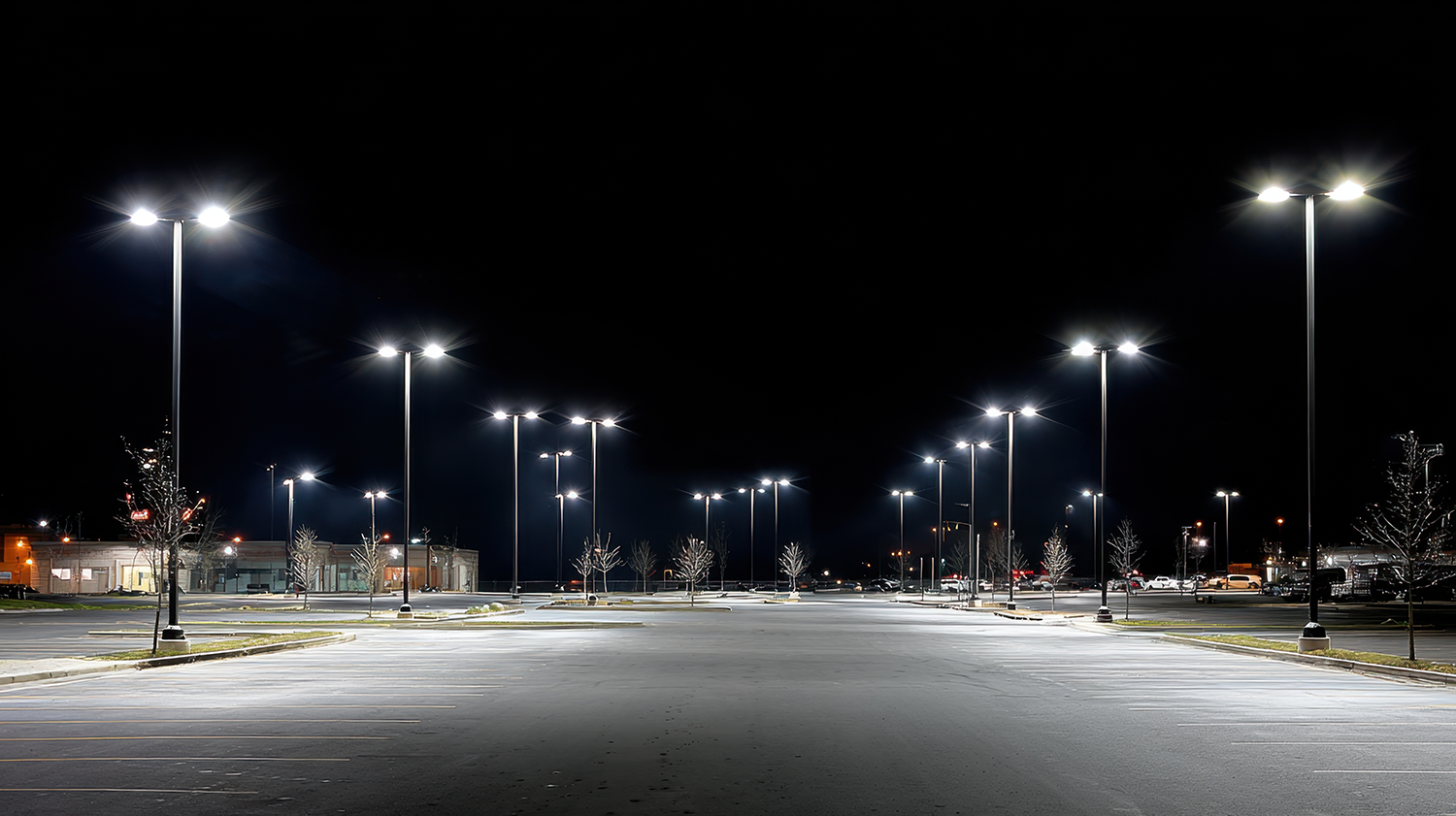
Since the LCC Series Lighting Contactor Cabinets launched, one question comes up on almost every project call: can the contactors inside the cabinet be controlled separately, or do they all switch together? It is a fair question. Most exterior and site lighting jobs are not a single on/off event. The parking lot needs to stay lit from dusk to dawn, while the building facade, signage or amenity areas should shut down hours earlier.
The answer depends on the model. The LCC-4 is a single-zone cabinet. The LCC-8 and LCC-12 are two-zone cabinets, and each zone runs its own schedule with its own override. That means one factory-assembled cabinet can do the work that used to take two separate contactor-and-timer assemblies, or an over-specified relay panel.
How Zoning Works Across the LCC Series
| MODEL | CONTACTOR POLES | ZONES | ZONE SPLIT | SCHEDULING |
| LCC-4 | 4 | 1 | 4 Poles | One schedule; all circuits switch together |
| LCC-8 | 8 | 2 | 4 + 4 | Independent schedule and override per zone |
| LCC-12 | 12 | 2 | 4 + 8 | Independent schedule and override per zone |
On the LCC-4, all four poles operate together as a single zone. Every circuit landed on the cabinet follows the same schedule, which is exactly what you want for a lot or a building perimeter that turns on and off as one.
The LCC-8 splits its eight poles into two equal zones of four poles each. Use it when two groups of circuits need different schedules and carry similar load counts.
The LCC-12 is built with three 4-pole contactors, but it is still a two-zone cabinet: one zone of four poles and one zone of eight poles. That uneven split is intentional. Most sites have one large load group, such as parking lot poles, and a smaller group, such as signage or facade lighting, so the LCC-12 puts the extra capacity where it is usually needed. Because each cabinet offers at most two zones, a site that needs three zones should pair an LCC-4 with an LCC-8 or LCC-12.

What "Independent Zones" Means on the Job
Each zone has its own schedule on the cabinet's astronomic 7-day / 365-day time clock. Because the clock calculates sunrise and sunset automatically, Zone 1 can run a true dusk-to-dawn schedule all year while Zone 2 turns on at dusk and shuts off at a fixed time, such as 11:00 PM. Nobody has to reset either schedule when the seasons change.
Each zone also has its own override input. The LCC-8 provides two remote switch inputs, one for each 4-pole bank, and any dry contact can toggle those inputs. A standard toggle switch rated for 120 Vac works as an override switch. If you want more than one switch location for a zone, additional switches can be wired in parallel so that any one of them triggers the override. If you need two separately controlled groups of circuits, specify an LCC-8 or LCC-12 and plan for an override switch for each zone.
Some features are shared across the whole cabinet: the Hand-Off-Auto switch, an exterior photocell (one is included, though each zone can use its own), a USB port for schedule backup and transfer, automatic Daylight Saving Time adjustment, and a 100-hour supercapacitor that holds settings through outages without a battery. Other features are provided for each zone: up to 96 scheduling set points, up to 50 holiday and exception periods, a built-in 2-hour timed override, a dry contact input for override or BMS integration, and a status relay.
Benefits of Two-Zone Control in One Cabinet
The most immediate benefit is consolidation. A site that needs two lighting schedules no longer needs two contactors, two time clocks and two enclosures assembled on the wall in the field. One prepackaged, factory-tested cabinet arrives ready to mount, which cuts sourcing, assembly and field wiring.
Programming is simpler as well. Both schedules live on one clock, so the installer commissions the site in a single pass. On multi-building projects, the schedule can be saved to a USB drive from the first cabinet and loaded into the rest in seconds, which keeps every building consistent and reduces commissioning errors.
Two-zone control also saves energy without sacrificing safety. Security and parking lighting can stay on all night while decorative, signage and amenity lighting turns off when nobody is there to see it. Holiday and exception periods keep lights off on closed days, and the 2-hour timed override lets staff bring a zone back on for an after-hours event without leaving it on all night.
Finally, it keeps the specification right-sized. A relay panel is the right tool for large facilities that need extensive zoning, 0-10V dimming and centralized management. For straightforward on/off scheduling with one or two zones, the LCC Series meets the intent of the electrical specification at a lower installed cost, with a 10-year warranty and a lockable NEMA 3R enclosure suited to indoor or outdoor mounting.
Applications
The examples below show how two zones map to common projects. Zone assignments and load counts are illustrative; size each job to its actual circuits.
| APPLICATION | ZONE 1 SCHEDULE | ZONE 2 SCHEDULE | SUGGESTED MODEL |
|
Apartment community |
Parking lot and drive lighting, dusk to dawn |
Pool, clubhouse and amenity lighting, dusk to 10:00 PM |
|
|
K-12 school |
Parking and security lighting, dusk to dawn |
Bus loop and walkway lighting on a school-day schedule, off on holidays |
|
|
Retail strip center |
Signage and facade lighting, dusk to store close |
Large parking lot, dusk to dawn (8-pole zone) |
|
|
House of worship |
Facade or steeple lighting, dusk to 11:00 PM with override for events |
Parking lot, dusk to dawn |
|
|
Warehouse or distribution center |
Perimeter security lighting, dusk to dawn |
Yard and dock lighting on a shift schedule (8-pole zone) |
|
|
Office or corporate campus |
Entry and parking lighting, dusk to dawn |
Landscape and facade lighting, dusk to 9:00 PM, off on weekends |
When a site truly needs only one schedule, such as a single parking lot or a building perimeter that runs dusk to dawn, the LCC-4 is the simplest and most economical choice.
Choosing the Right Model
Start with the number of schedules the site needs, then size by load.
- One schedule for every circuit: LCC-4
- Two schedules with similar circuit counts: LCC-8 (4 + 4).
- Two schedules where one load group is larger: LCC-12 (4 + 8).
- More than two schedules: use an additional LCC cabinet for the extra zones and copy schedules between cabinets with the USB port, or consider a relay panel when the project needs extensive zoning or dimming.
Specify It, Order It, Install It
Instead of writing "contractor provided" and leaving lighting control to be pieced together in the field, specify the LCC Series by model and zone count. You give the owner a complete, tested solution, and you give the contractor a cabinet that is ready to mount and program.
Review the LCC Series Datasheet
LCC-4 Bulletin | LCC-8 Bulletin | LCC-12 Bulletin