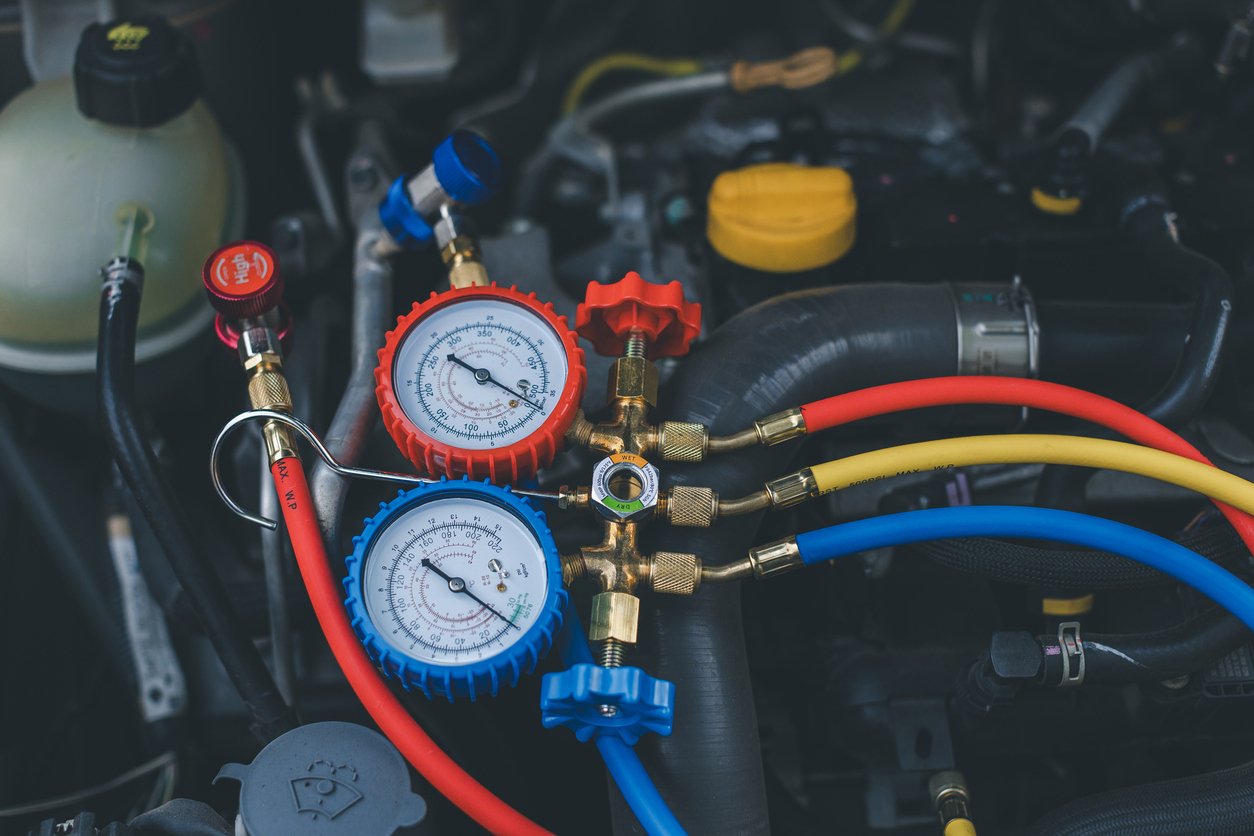
A2L refrigerants are now standard in new air conditioning equipment for the Florida market. As of January 1, 2025, manufacturers can no longer produce new residential and light-commercial AC equipment using R-410A under the EPA's Technology Transitions Rule, one of the programs the AIM Act (American Innovation and Manufacturing Act) authorized. The replacement refrigerants, primarily R-454B and R-32, are classified A2L (mildly flammable) under ASHRAE Standard 34 and carry a substantially lower global warming potential than the refrigerant they replace. Functional Devices, Inc. manufactures enclosed relays that can be used in the control circuits of the HVAC systems making that transition.

What the A2L Transition Changes
R-410A is classified A1, non-flammable, and requires no special precautions for arc-producing devices. A2L refrigerants, the replacements for R-410A, introduce a low but real flammability risk, so ignition-source requirements under UL 60335-2-40 apply to components inside the refrigerant-bearing equipment: switching devices near the refrigerant circuit must be designed so an arc cannot ignite refrigerant vapor. However, this is only an equipment-manufacturer design requirement. Equipment already in the field can still be serviced with R-410A, which remains available for existing systems.
What A2L Does Not Change for Control Relays
A relay used outside of refrigerant-bearing equipment can be selected the same way it was before the transition: based on coil voltage, contact rating, and enclosure, for the specific installation environment. No A2L certification exists for general-purpose control relays, and “A2L-compatible” is not a listing category.
What Else Changes for A2L Equipment
Ignition-source design is not the only requirement that shifts with A2L equipment. UL 60335-2-40 sets a maximum refrigerant charge based on the room where the equipment operates, calculated from the refrigerant’s lower flammability limit and the room’s minimum occupied volume. Equipment above a charge threshold requires an integrated refrigerant detection system: sensors that trigger fan-driven dilution or a shutdown if a leak is detected, well before the leaked refrigerant reaches a flammable concentration. Refrigerant line sets on A2L systems also carry permanent labeling identifying the refrigerant and its ASHRAE 34 safety classification at each service point.
For technicians, EPA Section 608 certification still governs who can service the equipment. A2L systems call for refrigerant-specific handling—recovery equipment and service tools rated for a flammable refrigerant, since standard service equipment is not—and some certifying organizations now offer supplemental A2L training alongside the standard 608 exam, covering safe charging, recovery, and leak response specific to a mildly flammable refrigerant.
Why A2L Equipment Affects Florida
Cooling equipment in Florida runs most of the year rather than seasonally, so runtime hours accumulate faster and replacement cycles arrive sooner than in heating-dominant states. A growing share of Florida service and replacement work therefore involves A2L equipment, for ordinary change-outs and service visits as well as new construction.

Frequently Asked Questions About A2L Refrigerants
Are special relays required for A2L systems?
No, not for the control circuit. Ignition-source requirements under UL 60335-2-40 apply to switching devices inside refrigerant-bearing equipment, which is an equipment-manufacturer design matter and must be addressed before the unit ever ships.
Can R-410A systems still be serviced in Florida?
Yes. The January 1, 2025 cutoff only applies to the manufacturing of new equipment. R-410A remains available for servicing systems already in the field.
Which refrigerants have replaced R-410A?
Primarily R-454B and R-32. Both are classified A2L (mildly flammable) under ASHRAE Standard 34.
What does A2L mean?
A2L is a refrigerant safety classification under ASHRAE Standard 34. The “A” indicates lower toxicity, and the “2L” indicates lower flammability: a mild flammability class with a slower burn rate than more flammable refrigerants. R-410A, by contrast, is classified A1 (non-flammable).
Do all A2L systems need a leak detection system?
No, only systems above a charge threshold tied to the room’s minimum occupied volume and the refrigerant’s lower flammability limit. Below that threshold, no integrated detection system is required, though the ignition-source design and line-set labeling requirements still apply regardless of charge size.
Why has the A2L equipment affected Florida sooner than other states?
Cooling equipment in Florida runs near-continuously rather than seasonally, so runtime hours accumulate faster and replacement cycles arrive sooner than in states with a shorter cooling season. A growing share of ordinary AC replacement and service work in Florida therefore already involves A2L equipment.
Source Control Relays for A2L-Era HVAC Work
Working with A2L equipment doesn’t change how a control relay is selected—coil voltage, contact rating, and enclosure remain the deciding factors—but in Florida, where replacement volume is greater than that of most states, relay availability is particularly relevant. An authorized Functional Devices distributor can confirm stock on general-purpose relays like the RIBU1C ahead of a service call. Find an authorized Functional Devices distributor in Florida before your next A2L change-out.